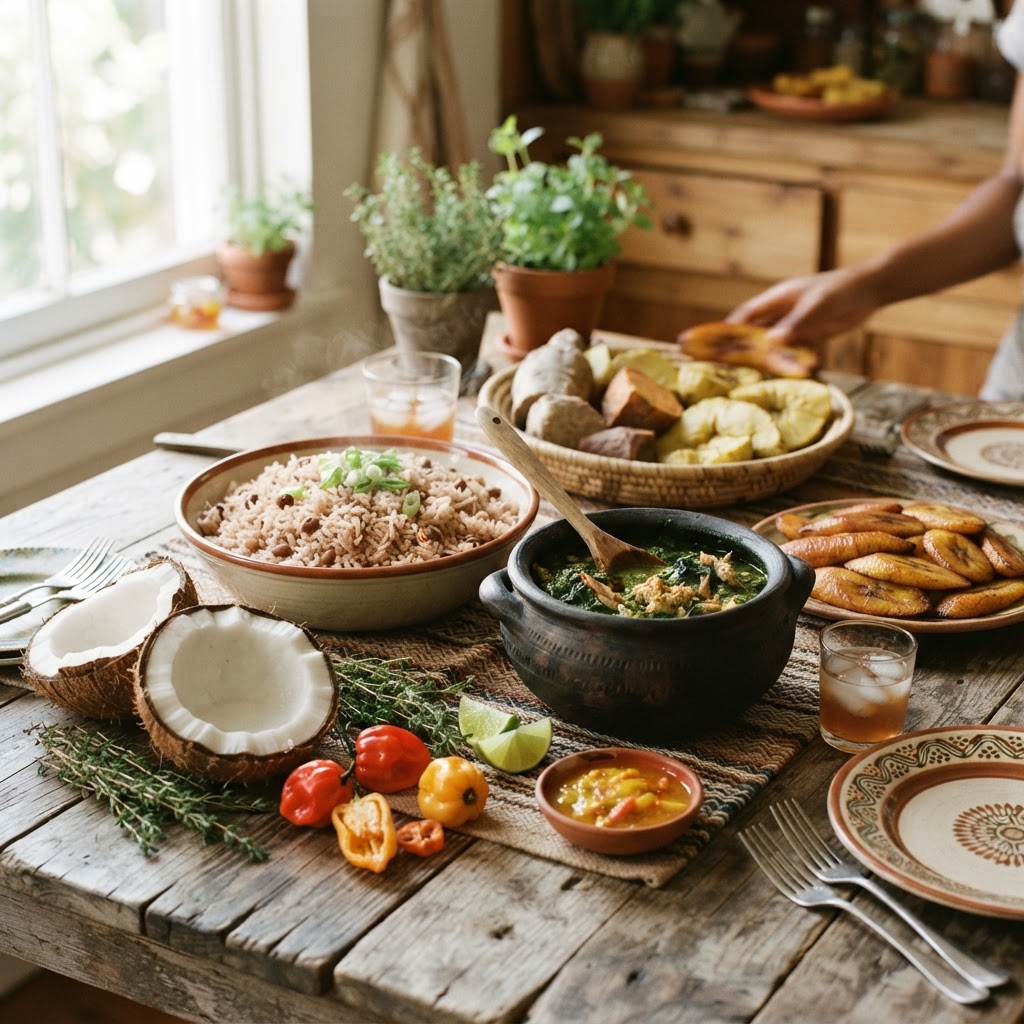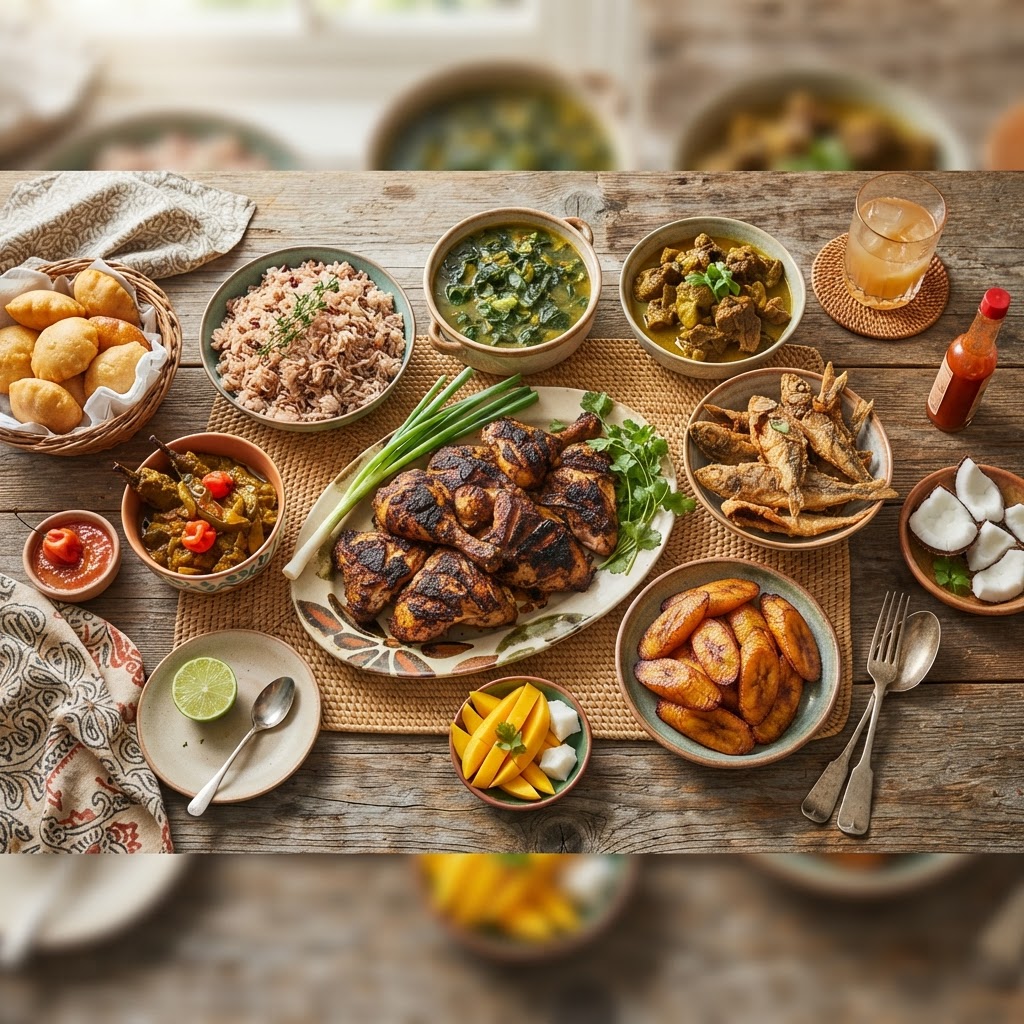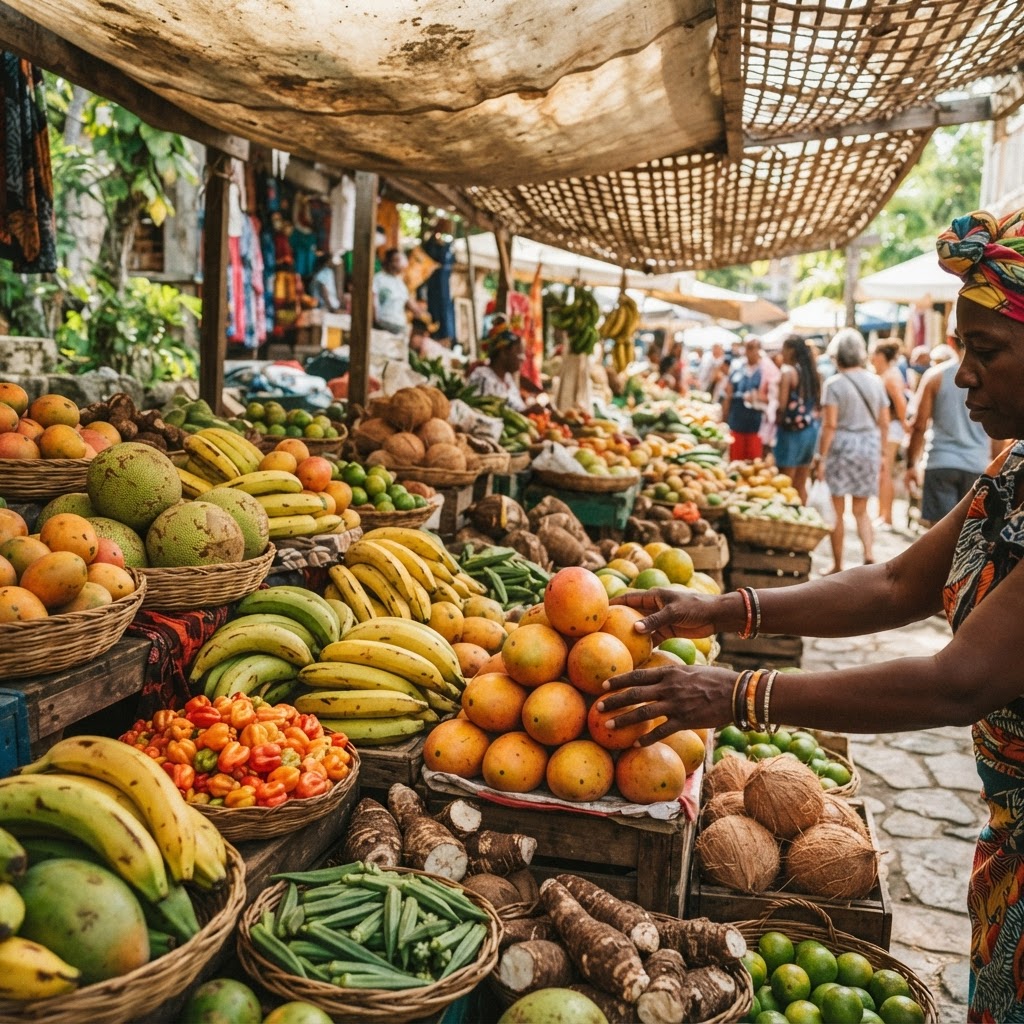
Food is an important part of Grenadian cultural life, from everyday cooking to family gatherings and public celebrations. A discussion of the country's cuisine should begin with its people and agricultural history rather than with a list of dishes for visitors to try. Oil down and nutmeg offer two windows into those stories: one centres on communal food preparation; the other connects local livelihoods, identity and trade.
Oil down and the national table
The Government of Grenada identifies oil down as the national dish. Its official description names breadfruit, salted meat, chicken, dumplings, dasheen leaves and vegetables among possible ingredients, cooked in coconut milk with herbs and spices. Particular households can prepare it differently; an official recipe should not be treated as the only authentic version.
The technique brings together ingredients in a single pot as the liquid reduces. The Grenadian dish is closely linked to shared preparation and eating. An NPR report about oil down includes the observations of Grenadian researcher Simeon Cornwall and local cooks, who describe the significance of gatherings, family experience and passing on food knowledge.
Breadfruit, salted food and the past
The ingredients in oil down point to broader Caribbean histories of agriculture, colonial labour and food preservation. Breadfruit became an important food across parts of the Caribbean, while salted meat and fish connect everyday diets with long-standing preservation practices and trade. The combination tells a story of adaptation without implying that all ingredients were introduced at the same time or by one community.
Why nutmeg matters to Grenada
Nutmeg is more than a flavouring in Grenada. The country's Central Statistical Office records the importance of nutmeg, mace, cocoa and other agricultural exports to livelihoods and foreign earnings. Its agricultural compendium describes nutmeg's introduction in the nineteenth century and its enduring symbolic importance, including its appearance on Grenada's flag.
Nutmeg production also involves cultivation, processing and trade. Understanding these activities connects household culinary uses with the work of farmers, processors and communities. The economic significance of a crop is not the same as proof that every Grenadian household prepares food in the same way.
Food heritage as living knowledge
A resource guide associated with UNESCO's intangible heritage programme describes the diversity of Grenadian food traditions and how they have continued to change. This is an important reminder: heritage is not a fixed menu. Family preferences, access to ingredients, seasonal availability and local practice shape how dishes are made and remembered.
Beyond a dish list
Grenadian food history is inseparable from the lives of Grenadians at home and abroad. Oil down can be a shared family meal, a marker of national recognition and a subject of culinary expertise. Nutmeg connects the kitchen with agriculture, trade and identity. A strong heritage feature listens to local cooks and growers rather than reducing their work to a set of tourist recommendations.